

Campus Mascot & Identity Evolution
Student-centered mascot initiatives across Berkeley City College and Merritt College
Overview
This case study documents two distinct mascot projects developed across the Peralta Community College District. These mascot projects grew out of a larger effort to strengthen school identity and student connection across campuses. While each college had different needs and constraints, both projects centered on the same goal: creating mascots that felt authentic, usable, and rooted in the communities they represent.
At Berkeley City College, the work focused on creating a mascot identity from the ground up, rooted in student voice and academic collaboration.
At Merritt College, the project involved correcting a long-standing disconnect between institutional identity and community understanding by transitioning the campus mascot to one that more accurately reflected its history and culture.
Rather than treating mascots as decorative graphics, the work focused on building identities that could live comfortably across athletics, student life, communications, and campus culture.
Berkeley City College Owls
Mascot Creation & Student Collaboration
Context
Berkeley City College historically operated without a formal mascot or athletics program, which limited opportunities for visual cohesion, school pride, and brand storytelling. While the idea of a mascot had come up in the past, there was never a clear visual direction or a shared sense of ownership around what that mascot should be.
Prior to the pandemic, there were attempts led by the student senate to adopt a mascot, but those efforts never gained enough momentum to move forward. That changed more recently with the arrival of a new college president, Denise Richardson, alongside broader district-wide revitalization under Chancellor Tammeil Gilkerson.
Rather than positioning a mascot strictly as an athletics symbol, the goal was to create a tool for marketing, engagement, and identity building. Something that reflected academic values, student creativity, and institutional confidence. This opened the door to building the mascot from the ground up, not as a top-down design exercise, but as a collaborative process rooted in student participation.
Process
The Student-First Approach
We didn't just want to give students a mascot; we wanted them to build it. Instead of treating them like a focus group, we brought them in as partners from day one.
The process kicked off in October 2024 with an open call for ideas. We went from over a dozen different animal suggestions down to a top three by December through workshops and ranked voting. By showing the work in stages rather than dropping a finished logo out of nowhere, we actually built excitement and trust across the campus.
Real-World Classroom Integration
During the Winter 2024 break, we took those student ideas and sketches and vectorized them to show college leadership in January. But the coolest part was allowing students from the Media Arts program to shine. This wasn't just a hypothetical assignment—students were working on a real institutional identity that would represent their school for years.
The Winning Concept: The BCC Owl
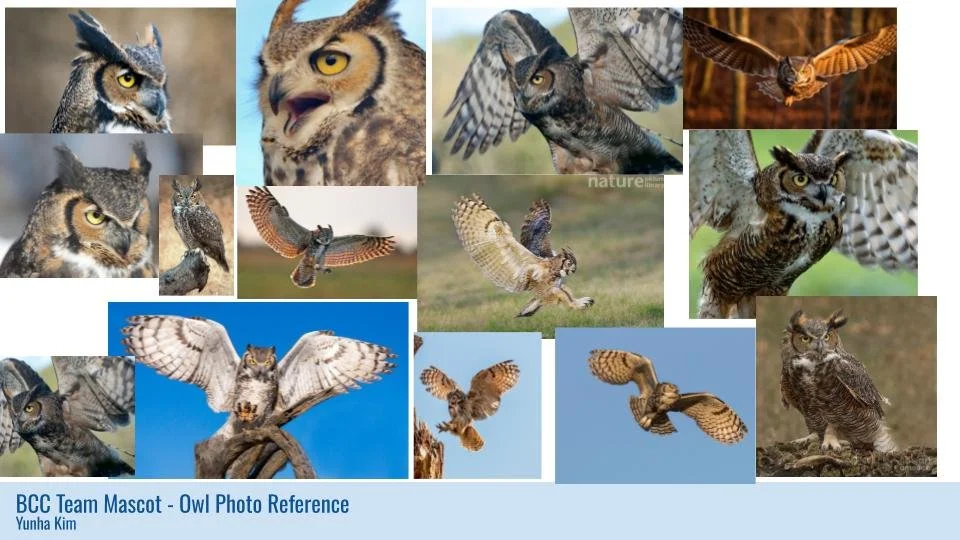
One student, Yunha Kim, really stole the show. She pitched a concept for an Owl mascot that immediately clicked with the administration. Her original sketches weren't just "input"—they became the literal foundation for the final design. We took her creative spark and refined it into the official Berkeley City College Owls identity you see today.
Initial Sketches and References Courtesy of Yunha Kim
Design Development
Designing a mascot for Berkeley City College was a unique challenge because the school didn't actually have a sports program at the time. We had to walk a fine line to create something that felt confident and approachable without leaning into those aggressive, cliché athletic tropes.
The goal wasn't just to fill a missing gap in our branding; it was about building school spirit and identity from scratch. We wanted to create a character that doubled as a powerful marketing tool—something that would look amazing on swag and that students would genuinely be proud to wear on a hoodie.
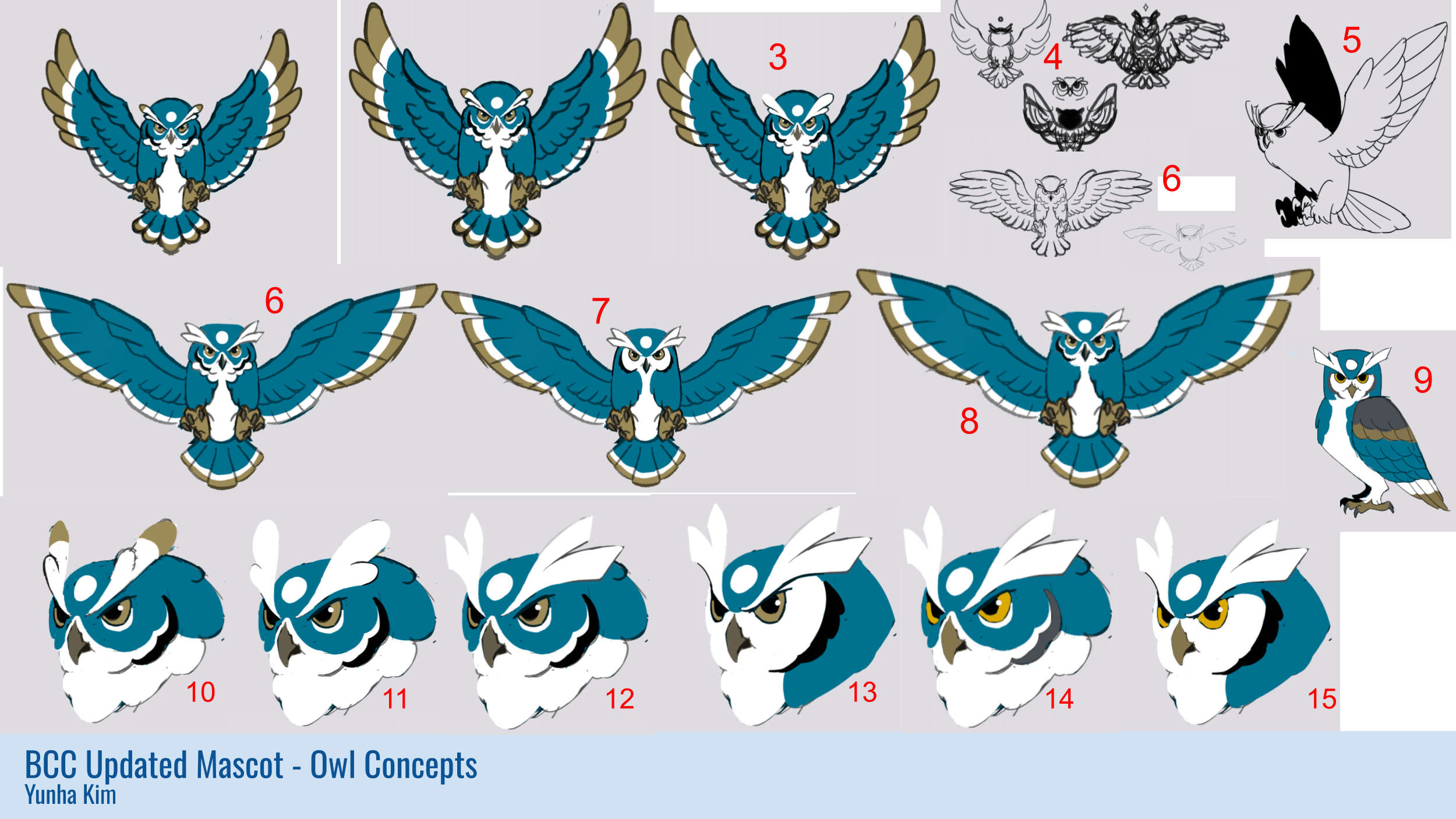
In early Spring 2025, I teamed up with Yunha Kim to turn her hand-drawn sketches into a professional, scalable mascot system. My role was to take her creative spark and handle the technical heavy lifting—refining the lines and vectorizing the art so the brand stays sharp on everything from a tiny social media icon to a massive campus banner.
Bringing the Owl to Life
The goal for the design was simple: make it look confident and friendly, not aggressive or cliché. We wanted a character that students would actually want to wear on a hoodie.
In early Spring 2025, I teamed up with Yunha Kim to turn her hand-drawn sketches into a professional mascot system. My role was to take her creative spark and handle the technical heavy lifting—vectorizing the art and refining the lines so the logo stays sharp whether it’s on a tiny Instagram icon or a massive campus banner.
The Details that Matter
We obsessed over the small stuff to make sure the brand felt cohesive:
Consistency: We ensured the character looked like the same "person" across every different pose and angle.
The Hidden Design Element: While the look is inspired by a Great Horned Owl, we made it uniquely ours by "encrusting" the official Berkeley City College logo into the owl’s head to form its horns. an Idea that came from Yunha, but was the most ingenious incorporation into the college’s Identity.
The project wrapped up in March 2025 with a reveal at the Board of Trustees showcase, marking the first official mascot introduction in the college’s history.
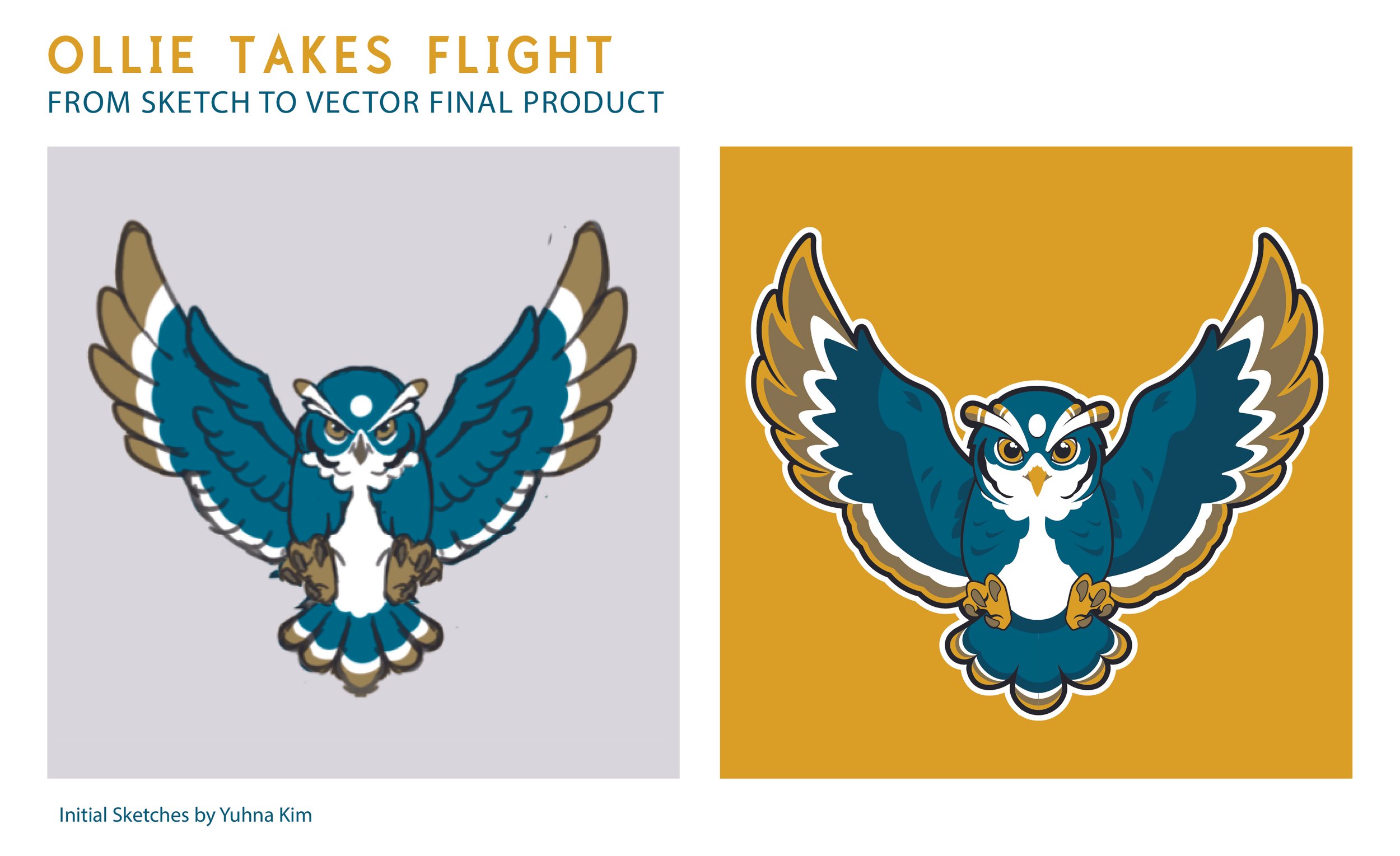
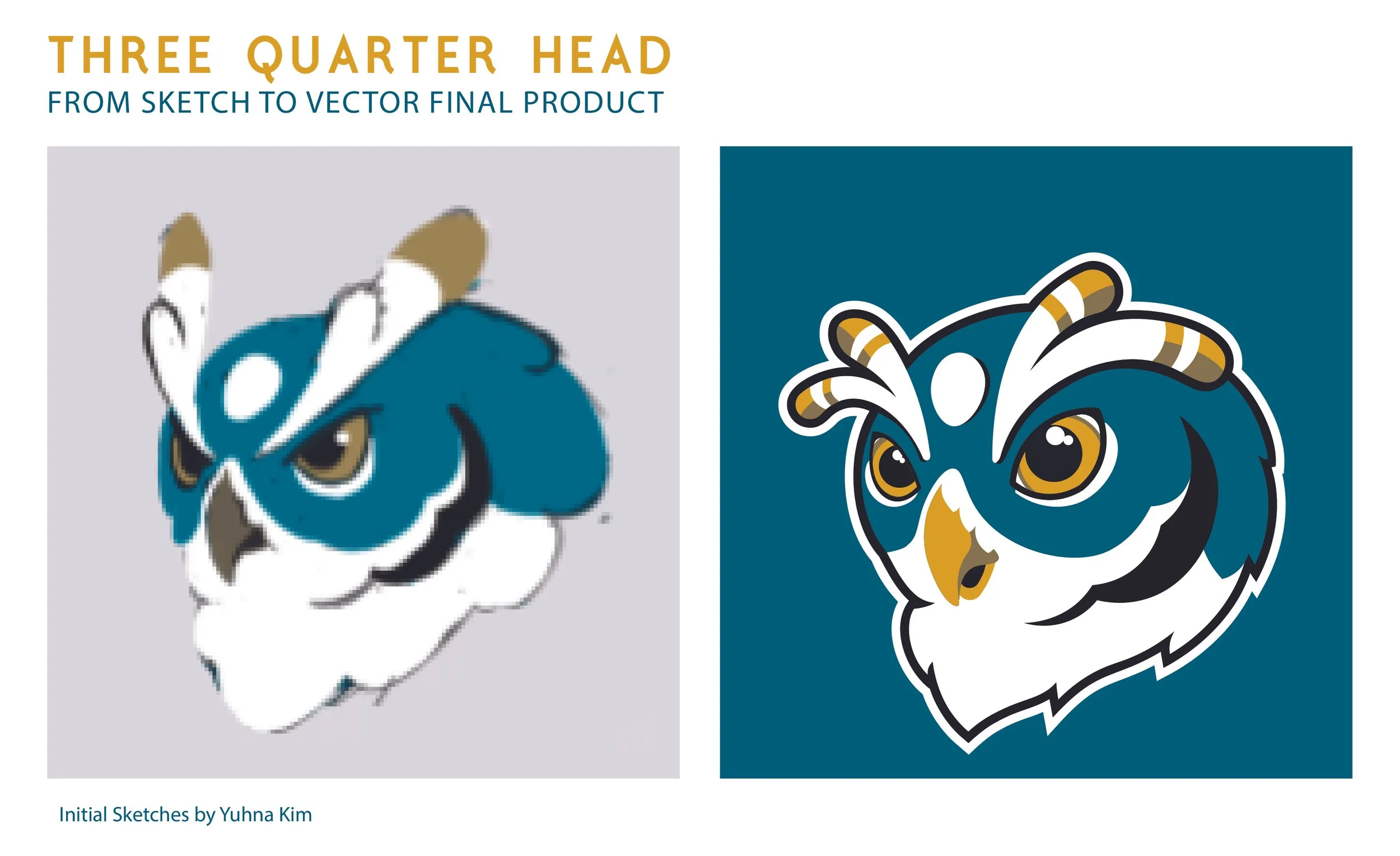
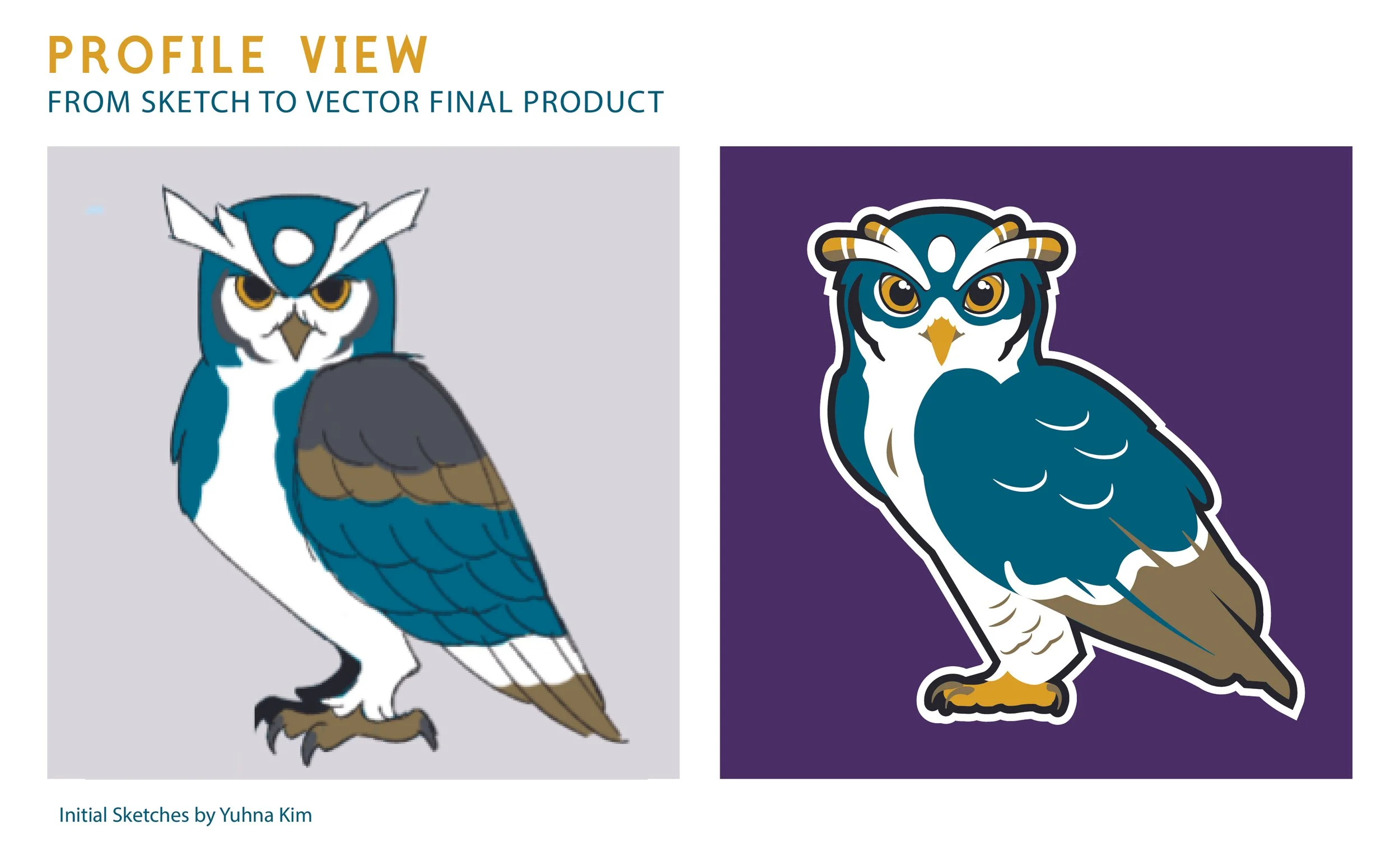
Outcome
A Mascot the Students Own
Because students were at the table from day one, the final mascot didn't feel like something forced on them by the administration—it felt like it was theirs. Ollie the Owl, — coined by President Denise Richardson — has quickly grown into more than just a logo; it’s a unifying symbol for the entire campus.
Beyond the Sidelines
Even without a traditional sports program, the Berkeley City College Owls identity has taken on a life of its own:
Instant Adoption: The mascot was embraced immediately, becoming a core part of the school’s visual identity.
Versatile Impact: It’s now the face of our marketing, student outreach, and campus events, helping to build a sense of belonging that was missing before.
Cultural Anchor: More than just a "fabulous marketing tool," it’s become a shared point of pride that anchors the school's culture.
The BCC Owl proved that you don't need a football team to have school spirit—you just need an identity that people actually connect with. Big thanks to Public Relations Officer, Tom Rizza, for helping conduct the surveys, and the administrative portion for the colleges.

Contributors
Yuhna Kim
Illustration and visual development
Berkeley City College Student
Instagram: @bunppang
Thomas Riza
Public Information Officer, Berkeley City College
Survey design, data collection, and campus engagement
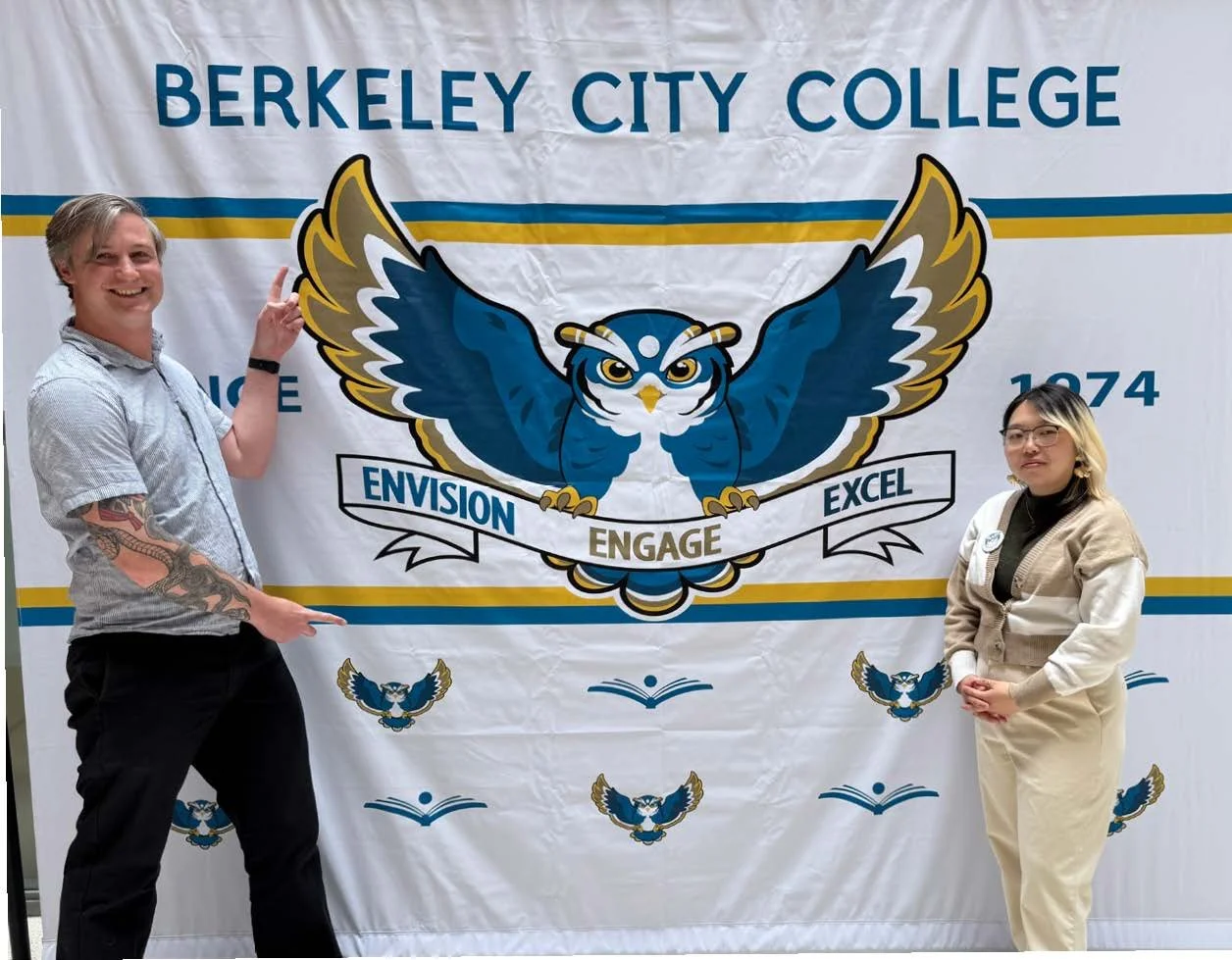
Public Information Officer Thomas Rizza & Yunha Kim Showcasing the New Mascot at the March 2025 Board of Trustees Campus Showcase
Merritt College Thunderbirds Panthers
Mascot Transition & Institutional Alignment
Context
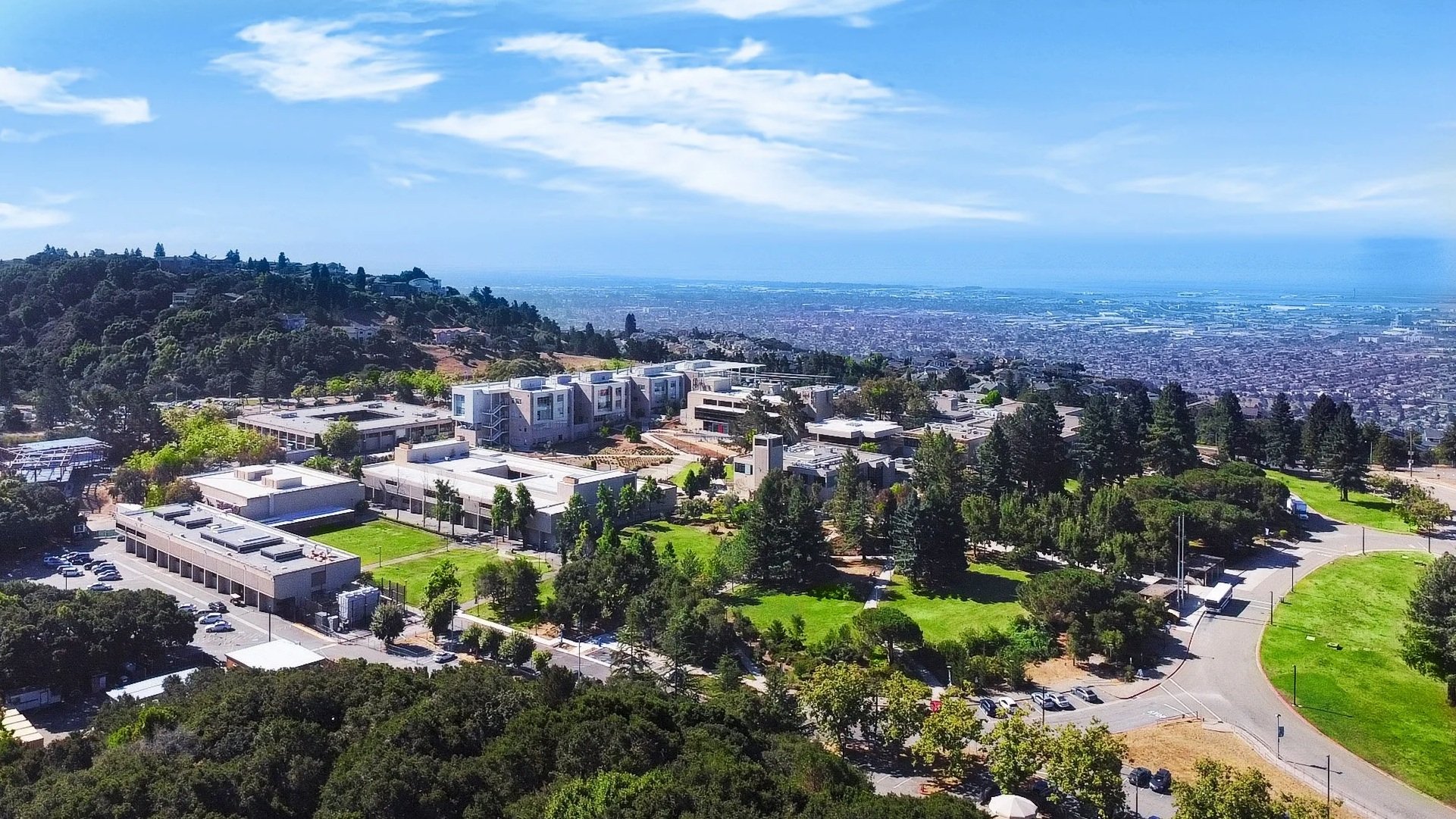
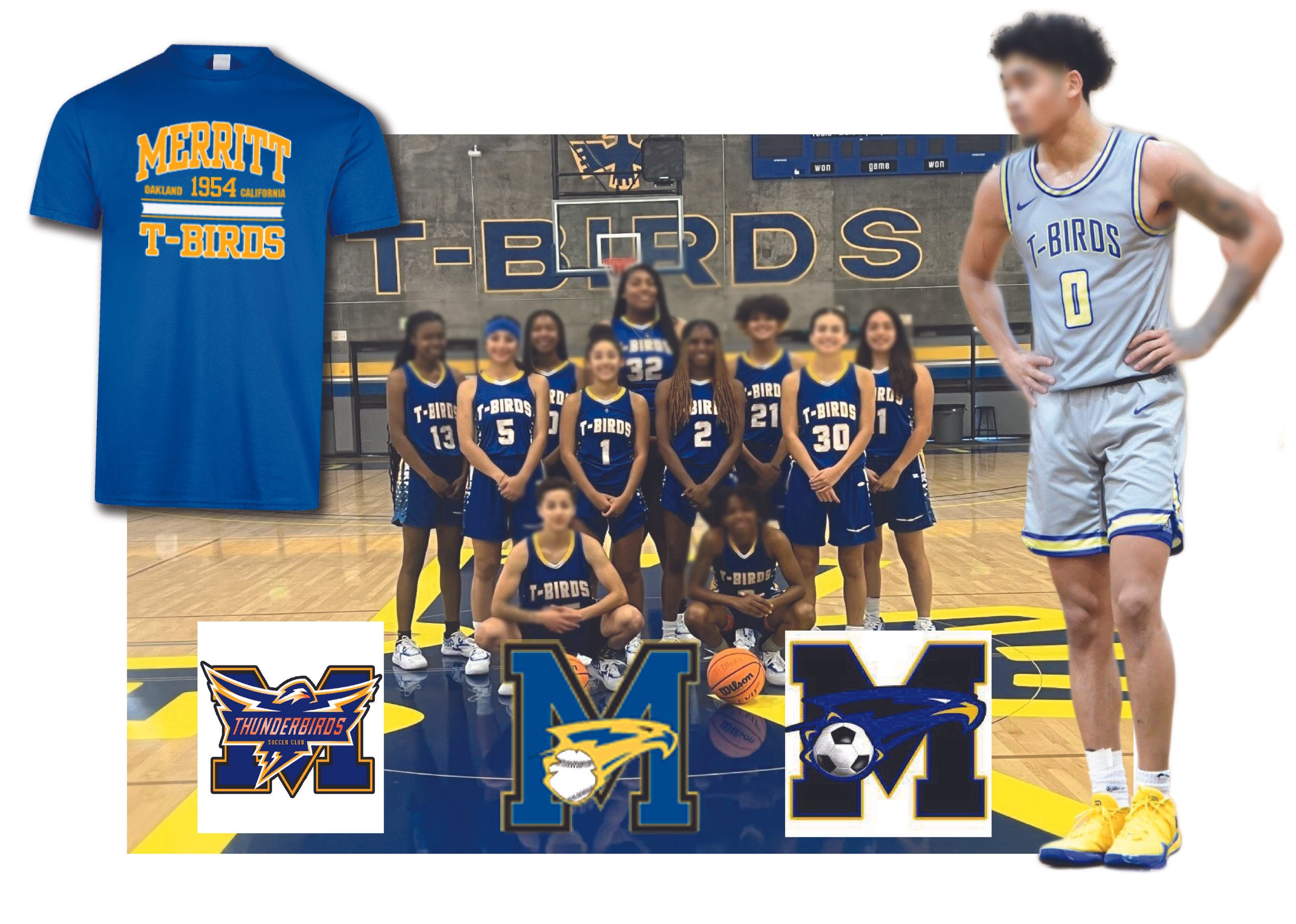
Merritt College’s official mascot had been the Thunderbirds since the 1960s, but across campus, a different story had long taken hold. Students, faculty, and staff consistently identified the Panther as the college’s true symbol. That belief was deeply tied to Merritt’s historical role as the birthplace of the Black Panther Party, as well as campus spaces like the Dr. Huey P. Newton Student Lounge.
By 2022, the disconnect between the official mascot and community perception was hard to ignore. Informal polling conducted by the College President repeatedly produced the same reaction: “Isn’t the mascot the Panther?” What had once been an unspoken assumption had effectively become a shared understanding across campus.
Approach
Rather than launching a large, exploratory survey process, the decision was made to acknowledge the clarity of community sentiment. The Thunderbirds identity lacked cultural relevance to the Bay Area and had no meaningful connection to Merritt College’s institutional history or surrounding community.
There were also practical limitations. Usable vector assets for the Thunderbird mascot no longer existed, which made consistent application difficult and created ongoing barriers for design and communications work. Also there were multiple unofficial logo
Working closely with President David Johnson, multiple Panther mascot concepts were developed and presented to the Merritt College Student Senate. Students selected a preferred direction through a vote, after which the design was refined in collaboration with the President before moving through faculty and staff approval.

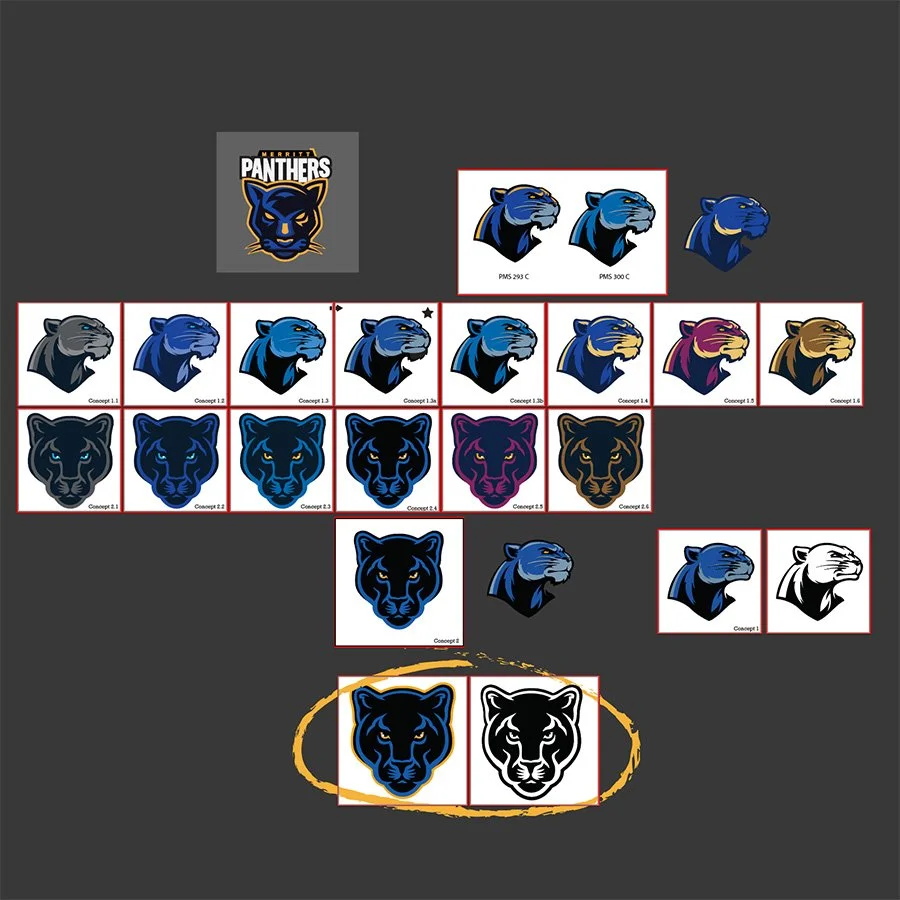
Early Concept when Surveying
Role & Implementation
Unlike the Berkeley City College project, this transition was driven by executive leadership momentum rather than a grassroots student initiative. My role was collaborative and advisory, providing design direction, production support, and systemization while the President led the change institutionally.
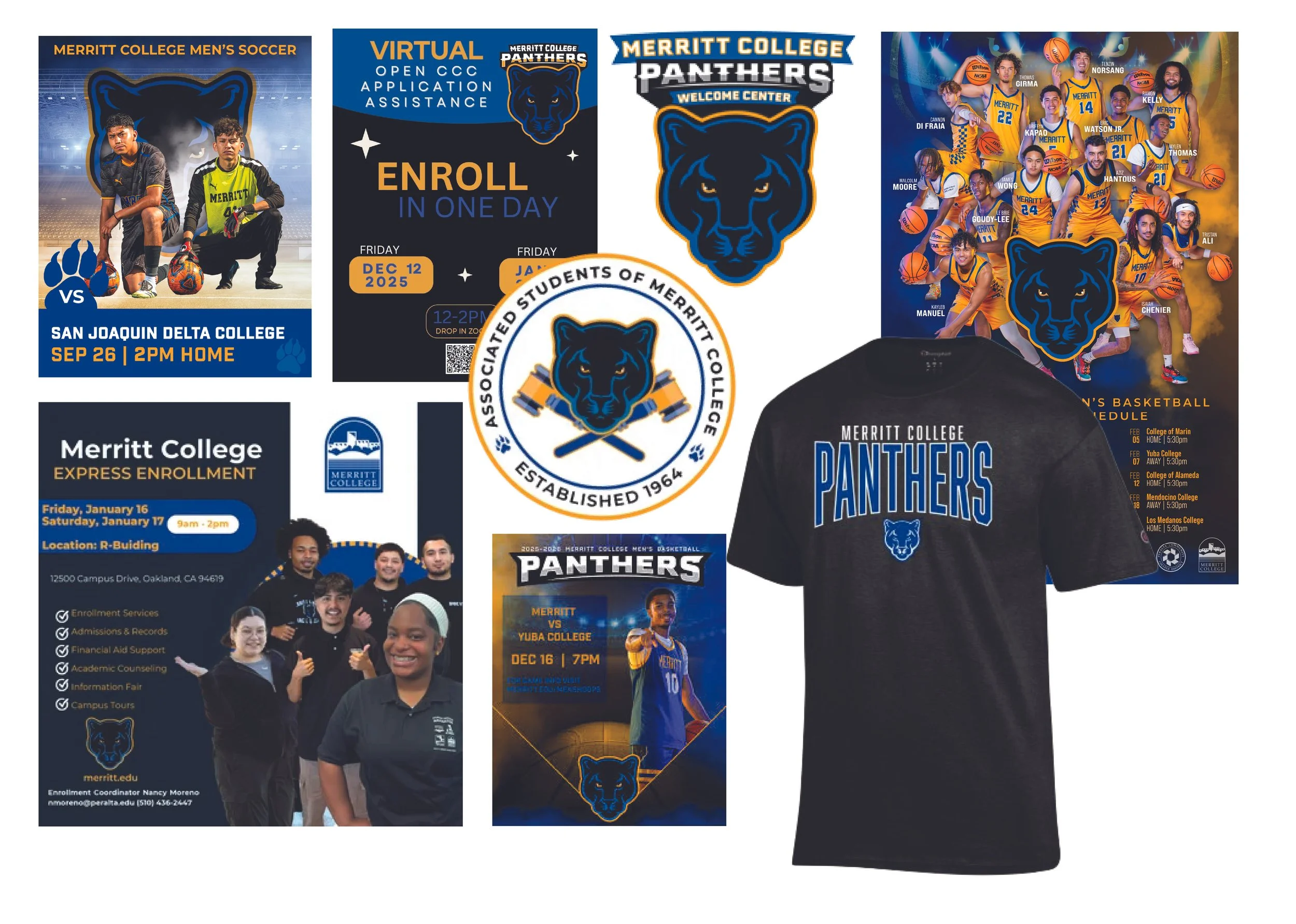
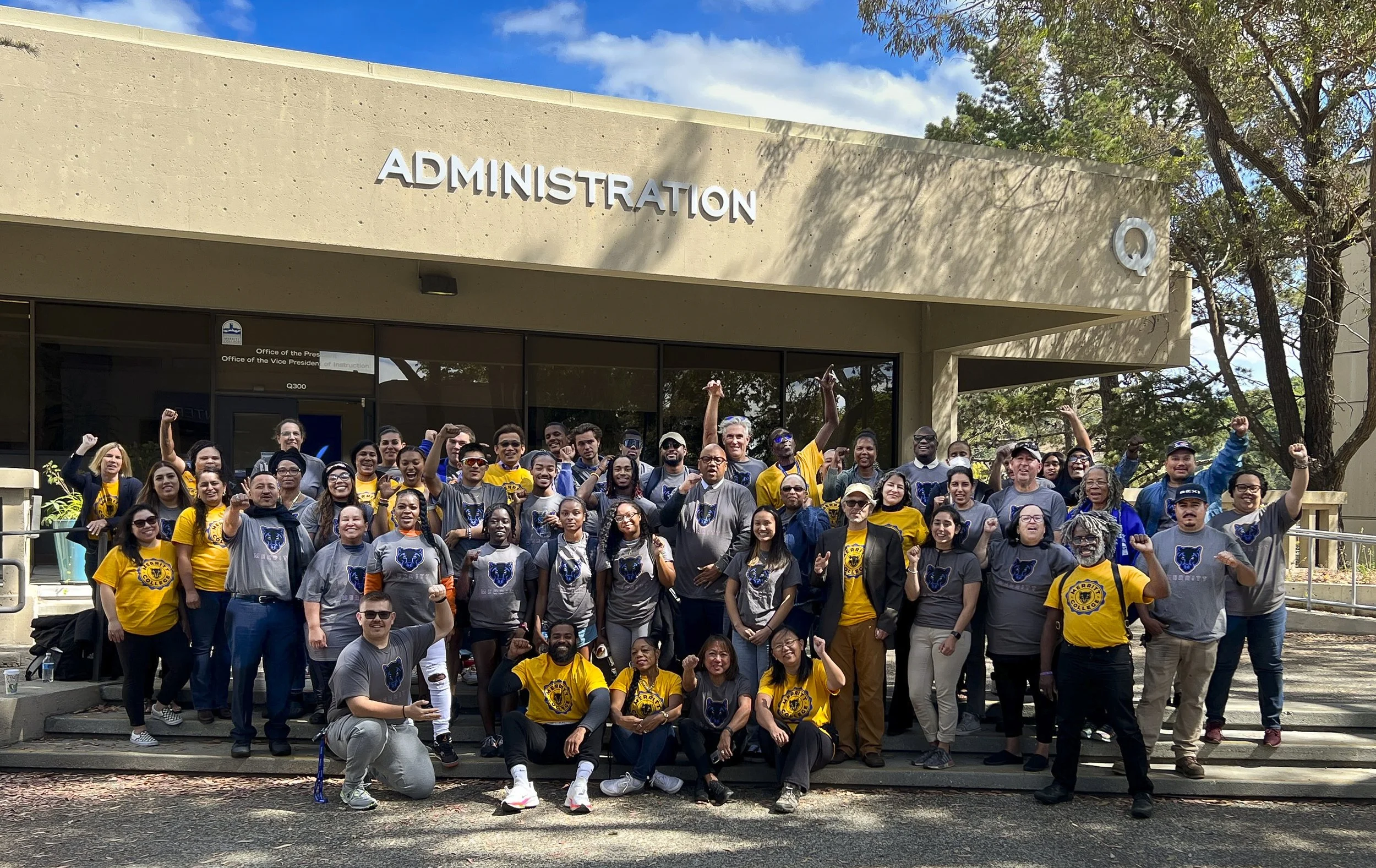
Once approved, the Panther mascot was adopted quickly across campus. Assets were developed to support athletics, marketing, and general communications, allowing the new identity to take hold without delay or confusion.

Outcome
The Merritt College Panthers identity realigned institutional representation with long-standing community understanding. The transition closed a decades-old gap between official branding and lived campus culture, while honoring the college’s historical significance.
More broadly, the project demonstrated how thoughtful design intervention can help resolve legacy inconsistencies, strengthen school pride, and support cultural alignment without erasing history.


District-Level Impact
Taken together, these projects highlight two complementary approaches to mascot identity work. One focused on creation, driven by student voice and academic collaboration. The other centered on correction, guided by cultural awareness and executive leadership.
Both efforts reinforced the value of building flexible identity systems that respond to campus context while still aligning with district-wide standards. The result is stronger institutional pride, clearer visual language, and mascot assets designed to last, not just to fill an immediate need.


Thumbnails created by AI based off of vector illustrations created by Marcus Creel.